We are

As the weather warms, more people seek time outdoors, and events like the NYC Summer Streets and Open Streets programs ramp up to accommodate them. Opening city streets to the public is not a new idea, and in SoHo, festivals like Artists’ Day would allow locals and visitors to celebrate the neighborhood right in the streets. This month, we look back at the history of Artists’ Days in the area and how streets closed to vehicle traffic were used to support the community and bring visitors to the neighborhood.
In the 1970s, when SoHo was dominated by galleries and artists, several Artists’ Day Festivals were celebrated. These festivities shut down local streets and filled the space with interactive art installations, performances, informational booths, and more.
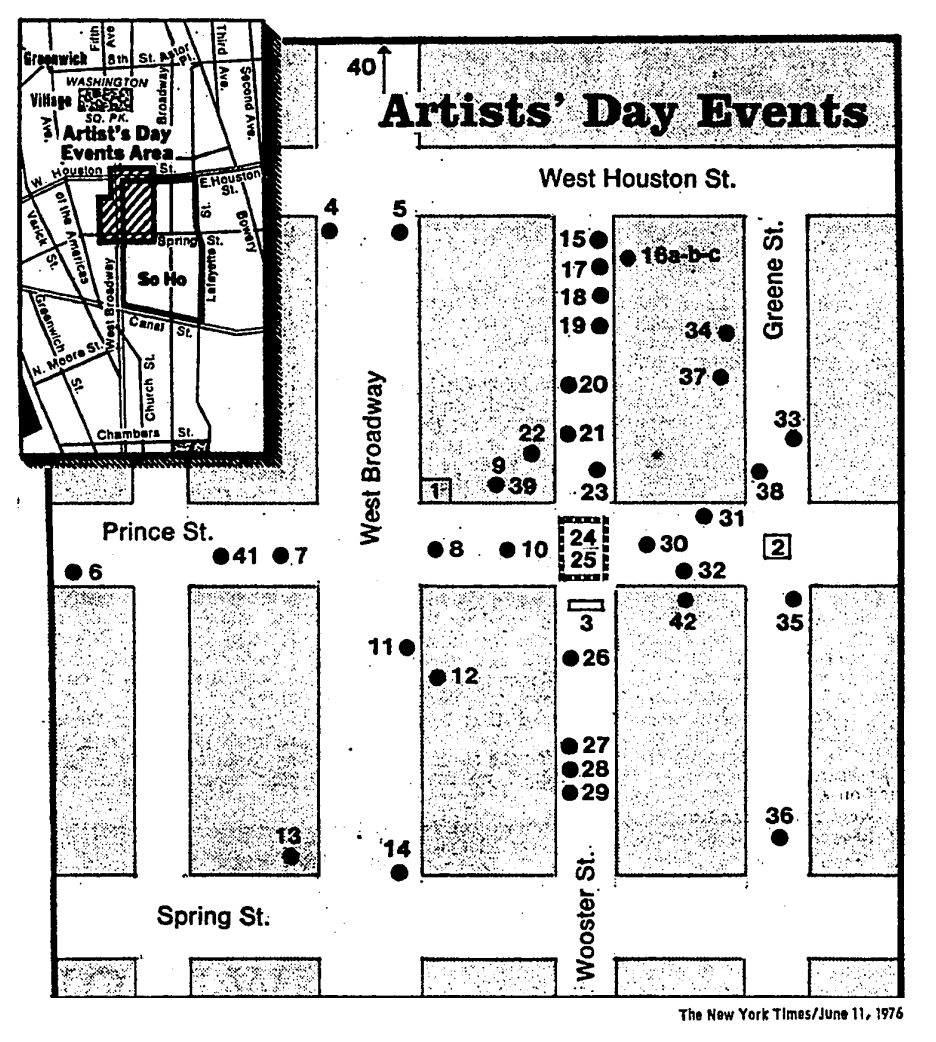
Map showing the Highlights of the 1976 Artists’ Day in The New York Times
Sponsored by the Association of Artist-Run Galleries, the festivals provided artists with an opportunity to showcase their work, especially those who were not represented by major galleries or were relatively unknown. Stories in The New York Times and the SoHo Weekly News focusing on the Festival increased awareness of SoHo, artists, and their needs.
Artists played a huge role in organizing SoHo’s community, and Artists’ Day often included political angles. The festival strengthened community ties and presented SoHo’s artists as a united bloc, and politicians took note. Former Mayor Ed Koch was a huge advocate for artists, describing them as a “major concern for the Mayor’s Office” in an interview with the SoHo Weekly News. Ed Koch was a noted attendee of the Artists’ Day Festival. Additionally, artists used the festival itself as an opportunity to organize and provide resources for each other. Groups like “Volunteer Lawyers for the Arts” and the Art Hazard Resource Center had booths at the festival to provide information about legal options and potential dangers from certain art materials. In other years, event organizers used the critical mass of artists to send a message to Washington to encourage federal funding for the arts.
Surpassing the practical and political purposes of the Festivals was the intent to delight, surprise, and encourage public engagement with art. Many of the exhibits were interactive. Jan Van Raay’s Octopus exhibit featured a dead octopus with trinkets wrapped in its tentacles. Anyone could approach and “trade” with the octopus, but first they were required to sign in a registry. At another site, visitors queued up to drink out of a toilet that had been retrofitted as a water fountain.

A May 1977 issue of the SoHo Weekly News showing various Artists’ Day events
The festival bustled with live performances as well. Mimes, clowns, dance performances, music, and poetry readings filled the streets. Theater and puppet shows were put on for children as well. The Marilyn Wood Dance Academy featured performers who suspended themselves from fire escapes and performed air-born dances. Artists’ Day embraced art in all its forms, in and outside of galleries.
Artists’ Day was integral to introducing people to SoHo and bringing visitors to the neighborhood. The Festival celebrated artistic endeavors and provided space for political action and information for residents. Exploring events like Artists’ Day shows the long history of temporarily transforming the neighborhood’s streets to reinforce community and engage visitors.
