We are

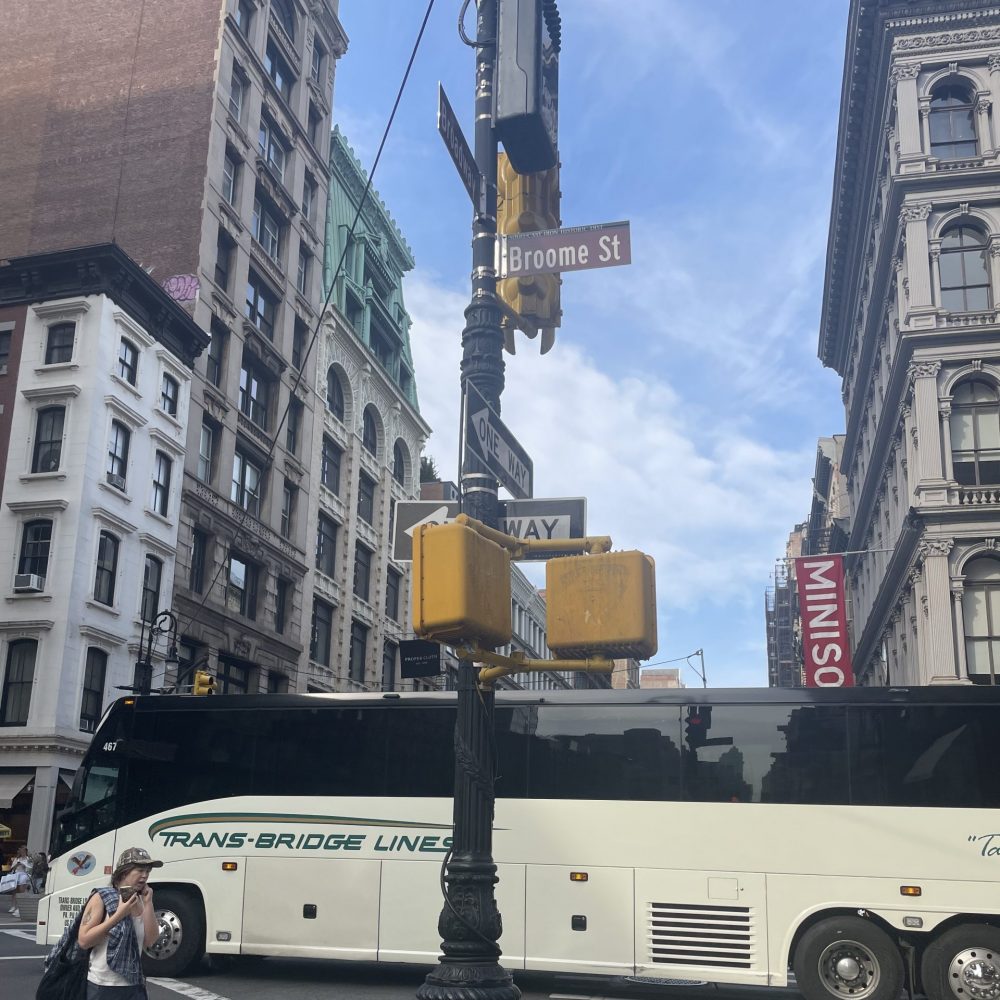
Broome Street is a unique cross street in the SoHo Broadway District. While the District is bordered on the north and south by two major throughways, Canal Street and Houston Street, most other cross streets only have one lane of through traffic. Broome Street, with two lanes for vehicle travel plus two lanes of parking, is a wider street that has long been used as a connector across Manhattan, between the Williamsburg bridge and the Holland Tunnel. As we examine its history, we can trace the iterations and legacy of Broome Street.
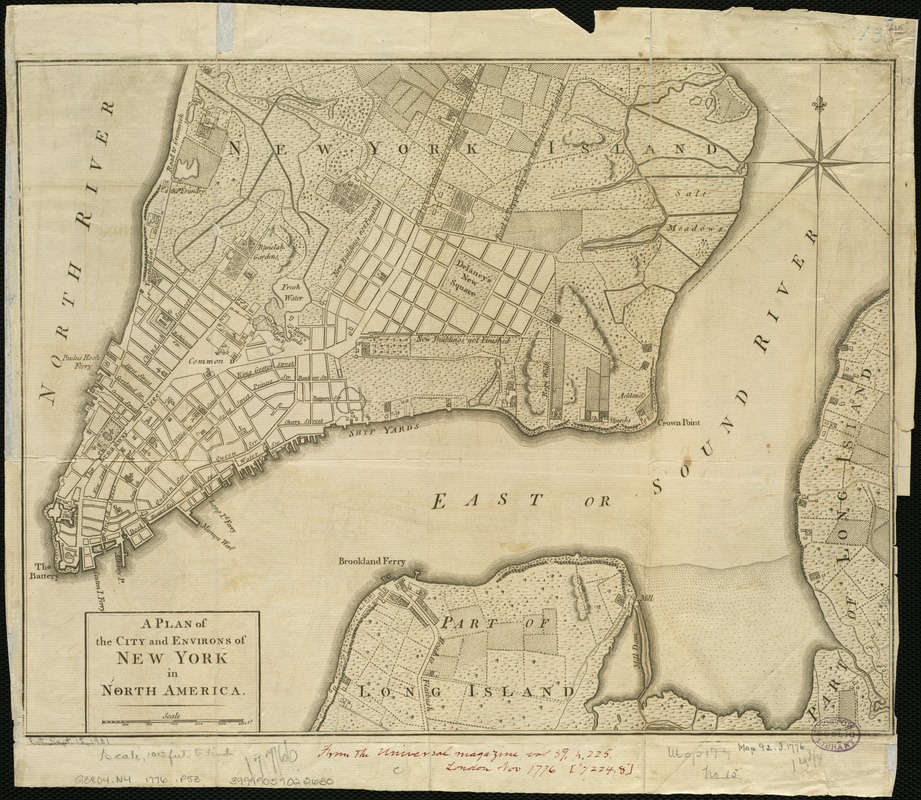
“A plan of the city and environs of New York in North America” from the Boston Public Library
The first record of the path for Broome St can be found in a map from 1776 showing the wealthy Delancey family’s plans for their land in Manhattan. The road that creates the north boundary of the “New Delaney (sic) Square” is Broome Street. The Delancey family were prominent Loyalists, and after the American Revolution their land was seized and sold. Although the plans for the Square were scrapped, Broome Street’s path was kept. Once it was constructed, the street was named for John Broome, a prominent merchant who was Lieutenant Governor of New York from 1804-1810.
In the next hundred plus years, Broome Street was cemented as an important and heavily trafficked street. The image below from the 1940s WPA tax survey shows trucks lined up on Broome, looking East from its intersection with Broadway. At the time, what is now SoHo was a commercial corridor that also had some manufacturing and warehouses. The photo also shows how Broome Street was once a two-way street. It changed to a one-way street in the 1950s to accomodate for traffic crossing from the Williamsburg Bridge to the Holland Tunnel.
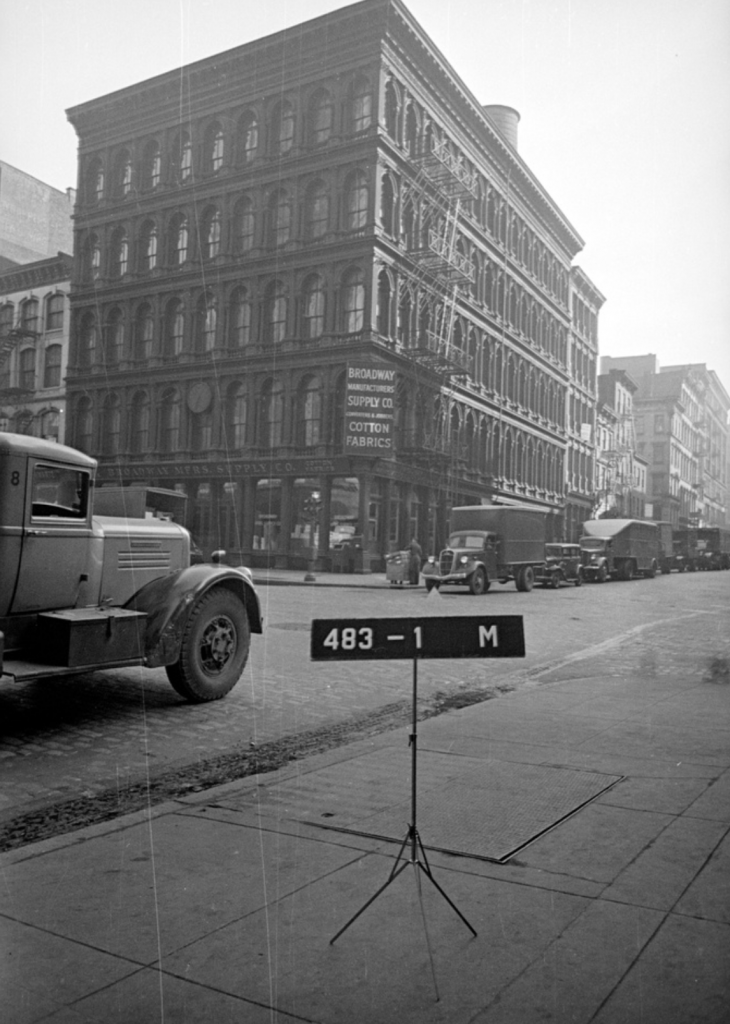
Broome St in the 1940s
The heavy traffic on Broome, and the heavy congestion on nearby Canal Street, caught the attention of Robert Moses. Moses selected Broome St as the path for his Lower Manhattan Expressway (LOMEX), a multi-lane highway whose construction would have required the destruction of much of Little Italy and SoHo. This series has previously covered the LOMEX, and the successful fight against it. Local activists, including Jane Jacobs and Julie Finch of Artists Against the Expressway in SoHo, banded together to stop the project. Their activism is responsible for the SoHo we have today.

A July 1995 issue of the New York Times documenting truck traffic in SoHo
Even without the LOMEX, Broome Street has continued to be a location of heavier traffic and serves as a connector between the Williamsburg Bridge and the Holland Tunnel. By the 1990s and 2000s, residents had banded together to demand measures be taken to reduce illegal truck traffic on Broome. Resident action ranged from calling attention to the issue in publications like the New York Times to altering or stealing DOT signs to further discourage truck traffic. Residents were also concerned about how truck traffic might affect the historic facades of SoHo, although experts considered weather to be the more destructive culprit.

A map from a January 2026 NYT article showing increased traffic speeds after a year of congestion pricing
Today, Broome Street retains its status as the widest cross street in the SoHo Broadway District at 65 feet. However, some signs point to a possible alleviation of traffic. Congestion pricing has decreased traffic in Manhattan below 60th Street, and the Williamsburg Bridge and the Holland Tunnel have seen huge improvements in travel times. Although new traffic counts for Broome Street have yet to be published, congestion pricing may have ushered in a new era of decreased traffic for Broome Street.