We are

Imagine hurtling uptown along Broadway at an uninterrupted 30 miles per hour, watching the cast iron storefronts of SoHo blur past. For roughly eight years, this was the reality for New Yorkers who rode the Broadway cable car system from Bowling Green up to 36th Street. The cable car system’s short life was punctuated by frequent crashes, derailments, and accidents. Read on for records of historic cable car mishaps in our district.
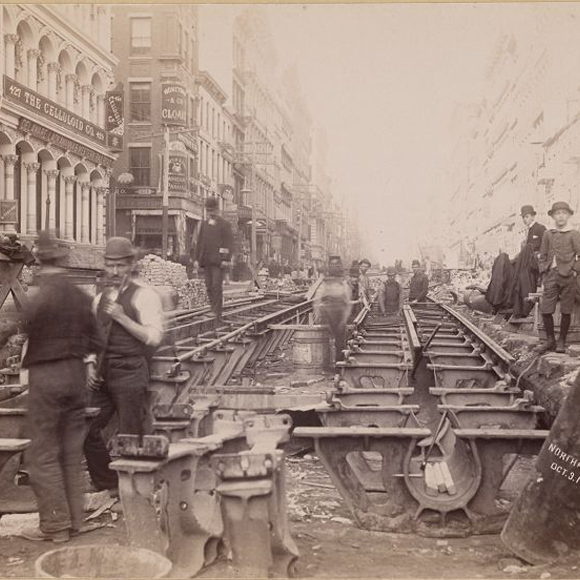
Cable cars first graced New York’s streets in the 1880s, offering users a much faster way to traverse Manhattan. Many north-south avenues, especially Broadway, were choked with traffic as horses, carts, and people jostled for space. Cable cars were an attempt to alleviate the growing pains of the city and improve travel times. The cable car section on Broadway was built by the Metropolitan Traction Company, a major owner of New York’s street railroads and cable car lines. Broadway was excavated and heavy cables were installed underground to propel the cars.
The bustling headquarters of the Metropolitan Traction Company was located just outside our District on the north side of Houston Street in the Cable Building. Above ground, a heavily decorated exterior housed offices for the company. However, the real action was below ground, with a basement that enclosed enormous steam engines and the 26-foot wide wheels that propelled Broadway’s cable cars. Today, the Angelika Film Center operates and shows films in that same basement.
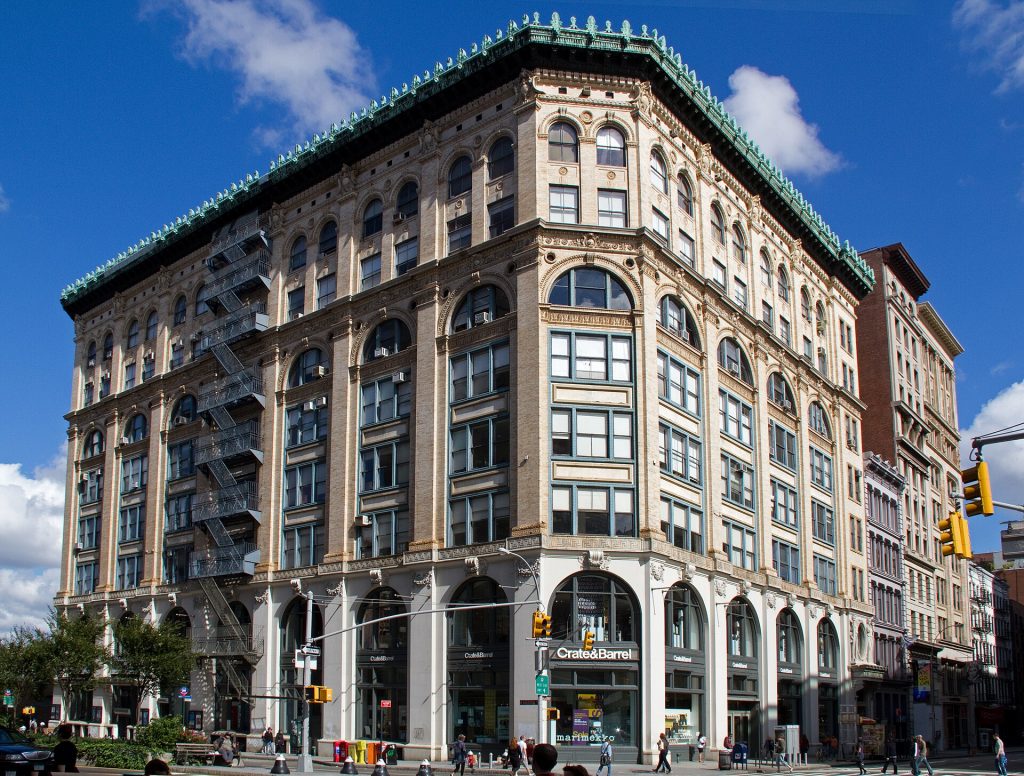
The Cable Building in 2011
On the street surface, cable cars joined the cacophony of traffic that often choked Broadway, and not without mishaps. A sharp turn by Union Square was nicknamed ‘Dead Man’s Curve’ because of the number of passengers thrown from the cars when operators failed to adequately slow down.
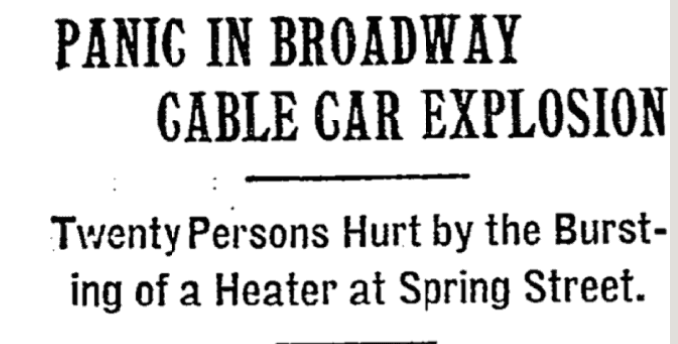
2/7/1901 Headline in the New York Times
Within what is now the SoHo Broadway district, accidents ranged from the routine to the extreme. On February 7, 1901, a cable car exploded on the corner of Spring and Broadway. The Times recounted “a stampede of the passengers” as people fled the growing flames. A bucket brigade formed to put out the fire. Miraculously, no one was severely injured or killed, although many reported singed hair and clothing. Some passengers were thrown from the car by the force of the explosion. The cause of the explosion was traced to a malfunctioning steam heating apparatus in the car. The explosion was noted to be the first of its kind, and the article called for a greater investigation into the root cause.
Not all dangers faced by cable car riders were mechanical in nature. On a November election night in 1895, a fight broke out between rival gangs of the Eighth and Fourteenth Wards. Broadway divided the two Wards, and the two groups began throwing sticks and rocks across the street at each other in a fight over resources for a bonfire. As police officers were occupied with election night duties, the brawl raged on for hours without intervention. Passengers riding the cable cars on Broadway were pelted with various objects, in some cases breaking windows. Whatever the safety protocols were at the time for the cars, they did not include stopping or diverting service in the event of a 200-person street fight in the path of the cable car. Eventually, the brawl was broken up by a single ex-policeman who was able to disperse the fighting boys. Rocks, sticks, and glass from broken shop windows littered Broadway and Prince Street in the aftermath.
The advent of the subway system brought an end to the cable cars’ short time leading the city’s transit modes. The first subway line ran under Broadway, along the same route as the Broadway cable cars. You can read more about the early years of the “underground trolley” in our previous article. As a May 1901 Times article presciently noted, “In the future there will be no cable cars anywhere, and it is said that before very long electric cars will be running… from South Ferry to the city’s northern limits”.