We are

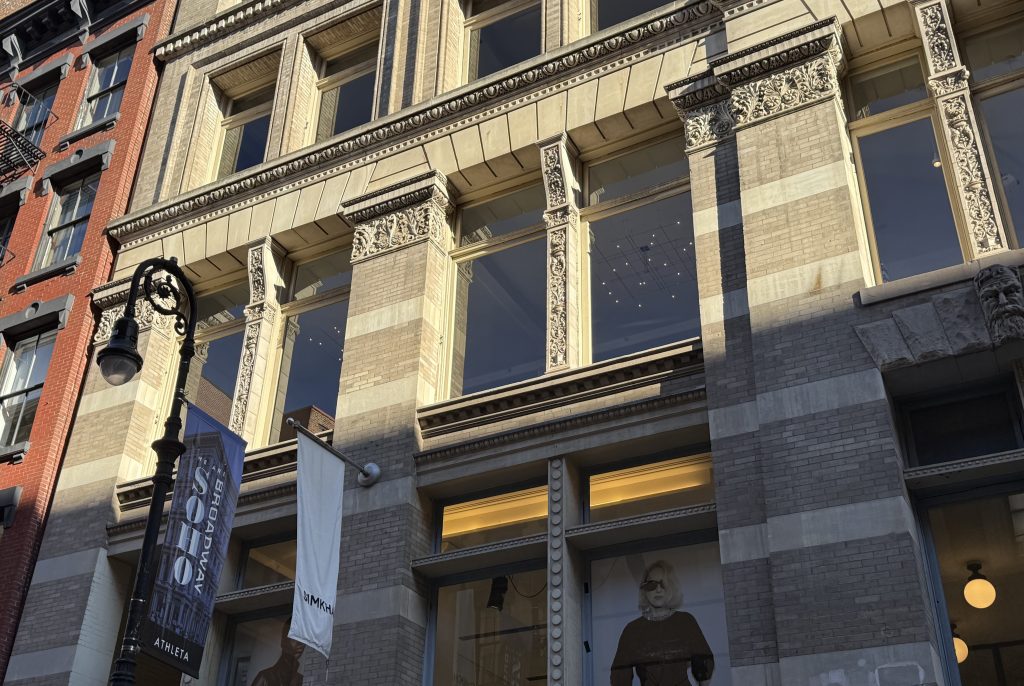
This month, we are looking at the history and details of 583 Broadway, also known as the Astor Building. This SoHo building may not be the first Astor building in NYC that you think of, but it actually was the site where the Astor Mansion once stood—hence its name. John Jacob Astor lived and died in the Mansion, and through his will gifted the estate to his granddaughters in 1848. Eventually, the property at 583 Broadway and the surrounding Astor estate was sold, and the Mansion was demolished. At one point, a saloon called The Canterbury stood at that address, although not much is known beyond a reference in a New York Times article from 1862.
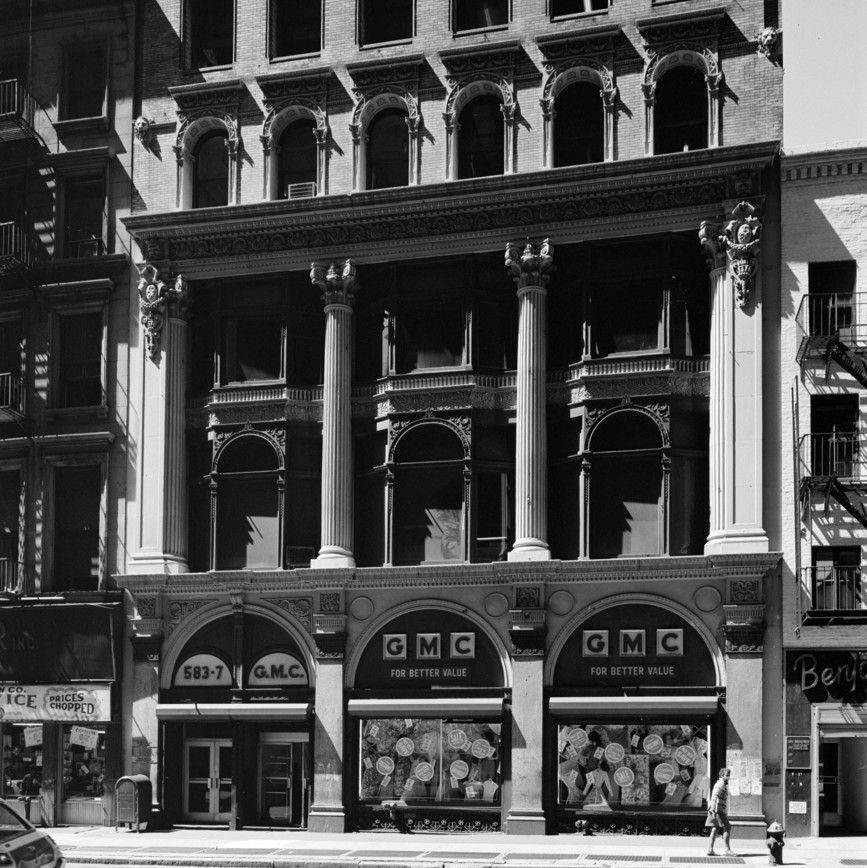
The next iteration of 583 Broadway (which also extends back onto Mercer Street) and the exact building that still stands today, began construction in 1896 and was completed in 1897. The 12-story loft was constructed out of brick, terra cotta, cast iron, and stone, and officially named the Astor Building. It was designed by architects Cleverdon & Putzel in the Beaux-Arts style, with a facade featuring Corinthian columns, bay windows, and ornate detailing.
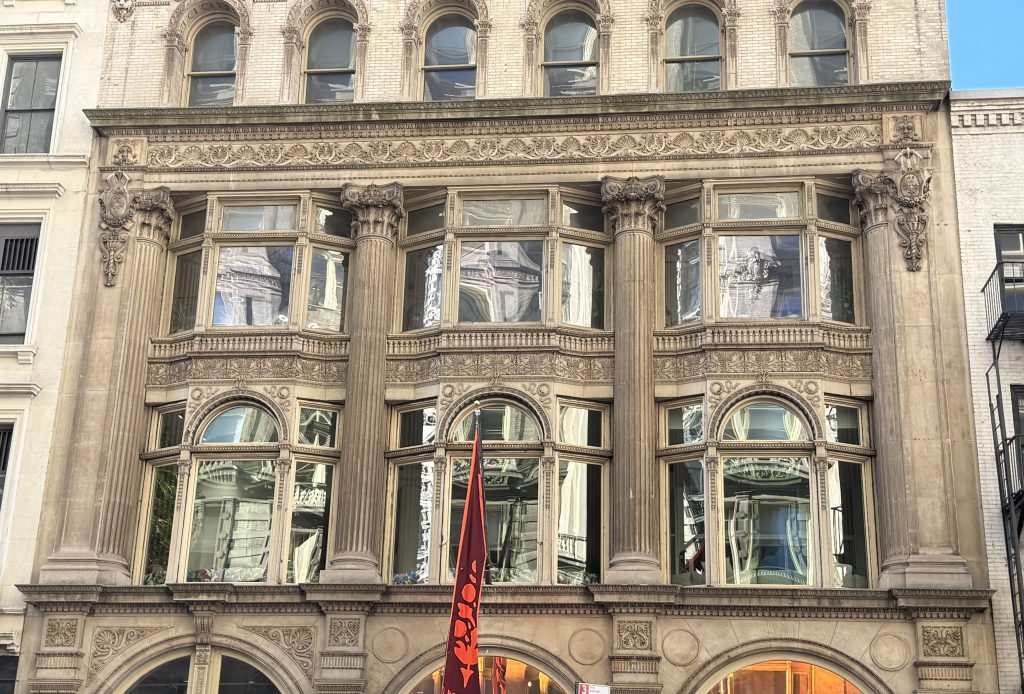
The Astor Building originally served as the site of garment manufacturing companies, with retail space on the first floor. Various clothing and hat manufacturers occupied the building from its completion until the 1950s. Some of these businesses include: C. E. Bentley Company, an art needle business with lace and embroidery; Julius Franklin’s wrapper and dress skirt factory; Hanauer, Arnstein & Siegel, a retailer of children’s coats and bonnets; the Eclipse Light Company’s electric light showrooms; Waldorf Hat Works; the Ginsburg Manufacturing Company, a lingerie factory; and the Spinnerin Yarn Company.

By the late 1950s, the garment industry had primarily moved out of SoHo. The Astor Building became a part of the SoHo-Cast Iron Historic District in 1973, but a gradual decline in businesses in the area over the decades eventually led to the building standing entirely vacant in the late 1970s. The building’s owners had the idea to turn the structure into a luxury hotel in the early 1980s. Construction began, and the windows were knocked out, but then progress stopped. The owners had defaulted on their mortgage and abandoned the project. 583 Broadway, now exposed to the elements both inside and out, fell into complete disrepair. A New York Times article described it as an “eyesore” and a “blight on the surrounding historic district.”

Things started to change in 1983, when a developer converted the Astor Building into a “combination rental-and-owned structure.” That same year, the New Museum moved in, occupying the ground floor, basement, and part of the second floor. Over a decade later, in 1995, Platt Byard Dovell Architects was commissioned to convert the top floors into artists’ studios, offices, and additional museum space, as well as to restore the facade. Restoration was completed in 2000, with the results visible to this day.
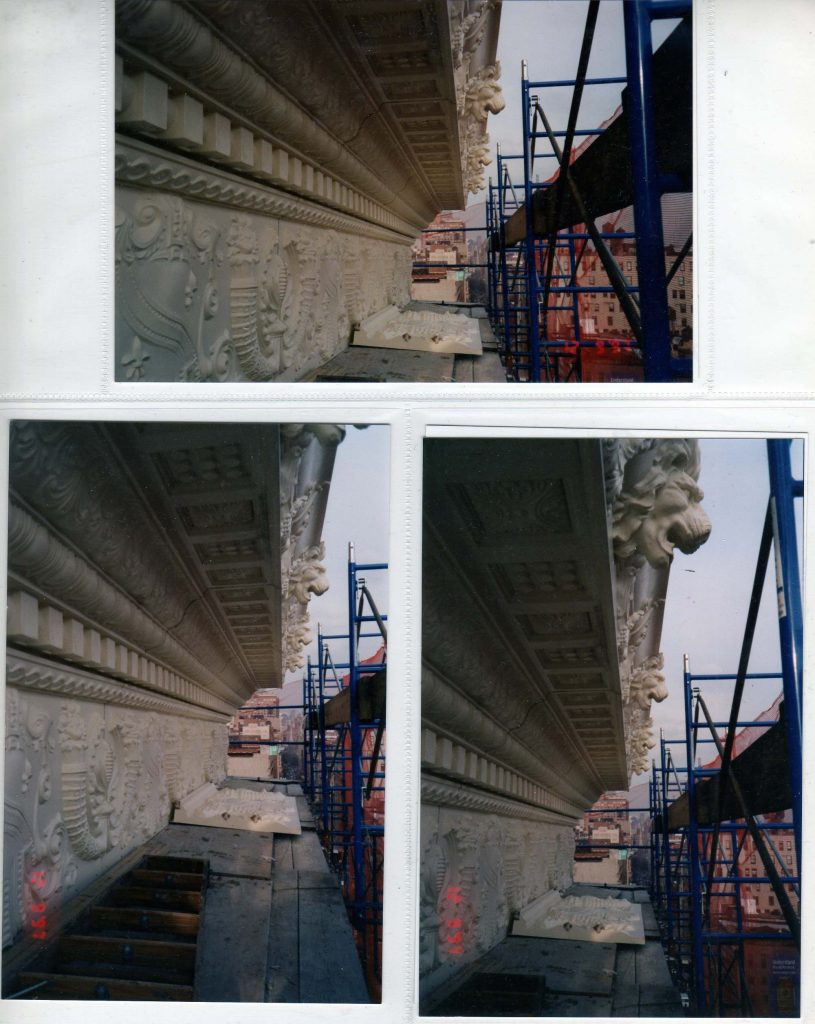
The New Museum moved out in 2001, although the building is still sometimes referred to as the New Museum Building. Today, FP Movement occupies the ground floor of 583 Broadway, Simkhai is at the building’s rear at 158 Mercer Street, and 22 residential units can be found across the upper floors. Although its interior has changed since its industrial beginnings, the Astor Building currently stands as a reminder of the fascinating and complex history of the SoHo neighborhood. The next time you walk by the Astor Building, look up at the facade—you might just notice something you’ve never seen before.